Livelihoods & Sustainability

Why Livelihoods & Sustainability

A steady income doesn’t just bring financial relief, it restores dignity and choice. In many low-income households, both adults and children are forced into informal, low-paying, and sometimes unsafe work. Women often bear the double burden of unpaid care and irregular income.Even where skills exist, the absence of training, support systems, and market linkages keeps families trapped in cycles of dependence and limited opportunity.

In rural communities, these challenges are intensified by environmental degradation and limited access to clean energy. Women spend hours collecting fuel, farms face soil and water stress, and families live with health risks from polluted environments. At AIDENT, we believe livelihood security and environmental sustainability must advance together. Clean energy reduces drudgery and improves health, while sustainable agriculture strengthens incomes and protects natural resources.

Our approach links economic opportunity with environmental stewardship. We train for real jobs, organise women into self-help groups and enterprises, strengthen market linkages, and promote clean energy and sustainable practices enabling livelihoods that are viable, inclusive, and resilient for generations to come.

Key Interventions

Women-Led Enterprises & Self-Help Groups

We mobilise and strengthen women’s collectives, enabling them to access credit, training, and entrepreneurship opportunities. From micro-enterprises to collective enterprises, SHGs have become engines of change, enhancing incomes. Alongside enterprise training, we build women’s confidence, decision-making power, and social standing and leadership so women can influence household and community decisions.

Skilling for Dignified Work (Youth & Women)

For young people in rural and low-income urban areas, access to decent work remains a major challenge. Our skilling programmes focus on market-relevant skills, vocational training, and life skills, ensuring that youth are job-ready and confident to seize opportunities. Whether through placements in industries or support for entrepreneurship, we help youth move from aspiration to achievement. Training is paired with job-readiness (soft skills, digital literacy) and placement support so that skills translate into income, not just certificates. 

Sustainable Livelihood Models for Rural Communities

We go beyond training to build viable value chains and support in diversifying and strengthening income sources through farm-based and non-farm-based livelihoods, creating producer groups/federations, and social entrepreneurship models. By linking communities to government schemes, markets, and innovative pilots, we help secure both inputs (backward linkages) and buyers (forward linkages) so incomes are predictable and scalable, not only economically viable but also socially inclusive and environmentally sustainable.

Clean Energy for Healthy Homes

We enable rural families to transition from traditional fuel sources to clean, renewable options that save time, improve health, and protect the environment. By introducing household-level biogas systems, clean cookstoves, and solar lighting, we create healthier homes and empower women to invest their time in income-generating activities instead of fuel collection.

Environmental Awareness & Community Stewardship

We build ownership of environmental protection through school-based campaigns, youth-led drives, and women’s self-help groups, turning awareness into action.

Flagship Projects

Women’s SHG & Micro-Enterprise Development

📍 Jamshedpur Rural Cluster, Jharkhand (Tata Power)
Strengthening women’s economic independence through Self-Help Groups, leadership building, financial literacy, and enterprise development. Over 50 SHGs formed, supporting micro-businesses in tailoring, livestock rearing, food processing, and local services. A strong model of women-led community transformation.

AIDENT’s women-led livelihood programme in Jamshedpur focuses on building economic resilience and leadership among tribal and marginalised women. Over 50 Self-Help Groups (SHGs) have been formed across 14 Gram Panchayats, enabling more than 750 women to access savings, credit, and entrepreneurship opportunities. The intervention goes beyond financial inclusion, it nurtures confidence, voice, and collective agency.

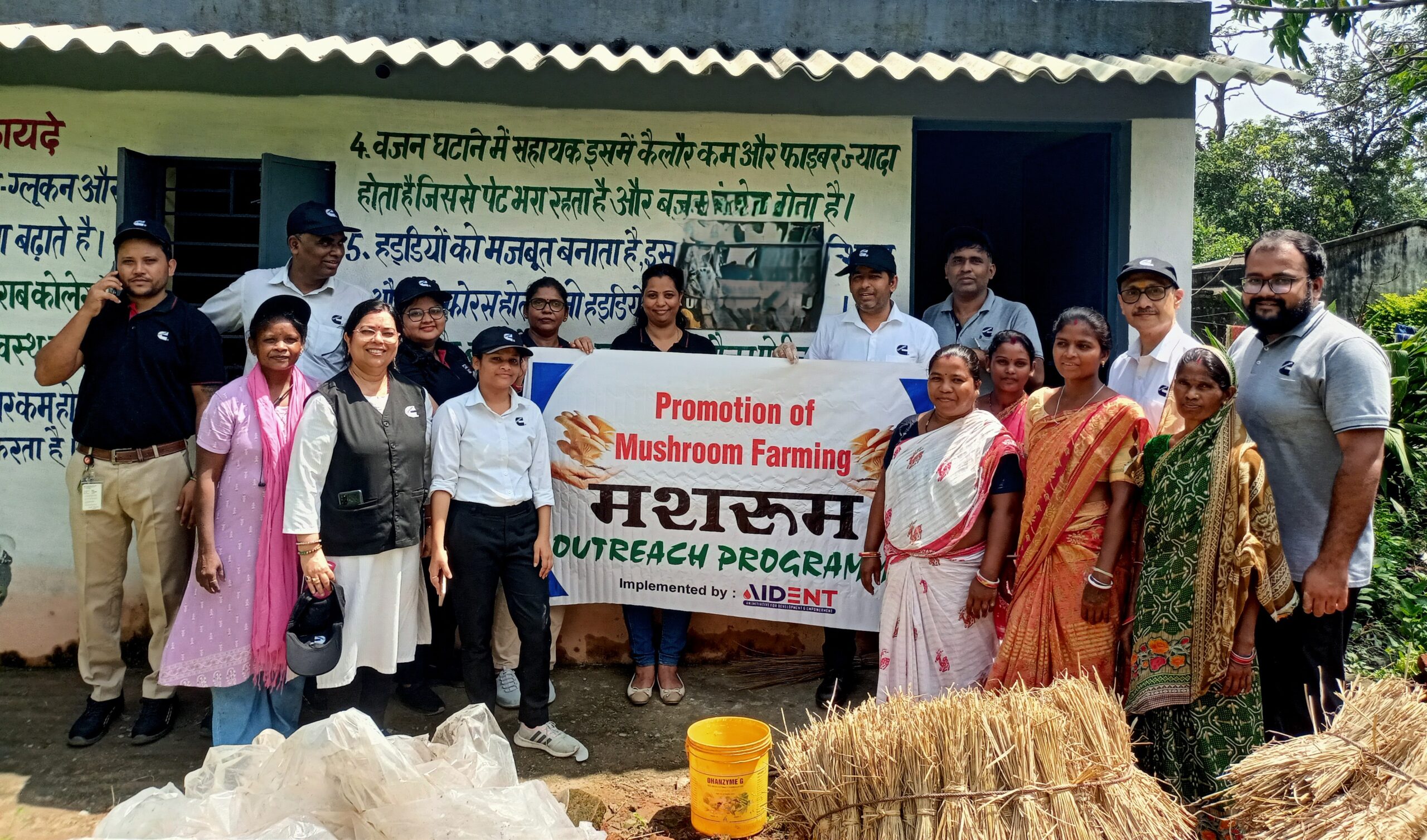
Women receive training in bookkeeping, group management, and enterprise development. Skill training is offered in tailoring, mushroom cultivation, food processing, livestock rearing, and local services. AIDENT also facilitates market linkages and exposure visits, helping women understand pricing, quality standards, and buyer expectations.

Many SHGs have launched micro-enterprises that generate steady income, reducing dependence on moneylenders and improving household spending on education and health. The programme also strengthens women’s role in village governance: SHG members now participate in Gram Sabhas, sanitation committees, and community monitoring.

This model demonstrates how economic empowerment, when rooted in collective leadership, can transform family dynamics, reshape community norms, and create long-term pathways for women’s autonomy.


📍 East Singhbhum & Jharkhand Tribal Regions
Promoting sustainable livelihoods through drip irrigation, soil testing, organic manure, crop diversification, and market linkages. This programme has helped tribal and small farmers increase productivity and shift to high-value crops, supported by solar irrigation and water conservation structures.

AIDENT’s sustainable agriculture initiative helps tribal and smallholder farmers transition to climate-resilient, high-productivity farming systems. Implemented with partners such as Tata Power and Green View Nursery, the programme introduces drip irrigation, soil testing, crop diversification, organic manure application, and improved farming practices that boost yields and incomes.

Once fallow or low-yield plots have been transformed into lush fields growing melons, tomatoes, chillies, cauliflower, and other high-value crops. Solar-powered irrigation ensures year-round water access while reducing costs. AIDENT also organises farmers into collectives and federations to strengthen bargaining power, reduce dependence on intermediaries, and secure fair market prices.

Training sessions, field demonstrations, and exposure visits build farmers’ confidence in adopting modern techniques. Improved market linkages help stabilise income streams and reduce risk. The programme has enabled many tribal families to move beyond subsistence farming into commercially viable agriculture, laying the foundation for long-term rural prosperity.

📍 Haryana, Bihar
A network of skill development centres offering courses in computer training, tailoring, electrician work, retail, and vocational skills for first-generation learners. With 6,000+ youth trained, the programme enables young people from migrant, low-income communities to secure dignified jobs and long-term livelihoods.

AIDENT’s youth skilling programmes are designed for first-generation learners, migrant families, and urban poor youth who lack access to professional training and job opportunities. Centres provide courses in computer skills, English communication, retail management, tailoring, electrician work, and technical trades like IT and mobile repair. Training is complemented with soft skills, digital literacy, personality development, and job-readiness coaching.

Through partnerships with organisations such as Terre des Hommes, Haryana SSA, and SMILE Foundation, more than 6,000 adolescents and young adults have been trained over the years. Many have secured employment in retail, hospitality, service industries, or set up small home-based enterprises.

These programmes go beyond certification: they offer counselling, career guidance, and motivational support to youth who often struggle with confidence and limited exposure. By enabling dignified work and stable income, the initiative helps families break free from cycles of unskilled labour and economic vulnerability.

📍 Begusarai & Lakhisarai, Bihar
Installation of 413 household biogas plants to replace firewood and crop residue. The initiative reduces indoor smoke, cuts deforestation, provides organic manure for farms, and saves women 3–4 hours a day, which can now be used for livelihoods and family care.

AIDENT supported the installation of 413 household biogas plants to replace firewood, crop residue, and other traditional fuels that cause severe indoor air pollution. The initiative helps families reduce exposure to smoke, improve respiratory health, save income spent on fuel, and reduce deforestation pressures.

Biogas slurry serves as high-quality organic manure, improving soil fertility for small farmers. Women, who spent hours collecting firewood, now save 3–4 hours daily, time that can be invested in income generation, childcare, or rest. The intervention directly links energy access with health, livelihoods, and environmental sustainability.

Through awareness sessions, demonstrations, and handholding support, families learned how to maintain their plants and use byproducts effectively. The programme proves that clean household energy solutions can transform rural quality of life when accompanied by behaviour change, affordability, and community participation.

Impact So Far

3,200+ SHGs / ~32,000+

women strengthened in Odisha

300+ SHGs

Self-Help Groups (SHGs) promoted in East Singhbhum, & Palamu, Jharkhand

₹ 3+ Crore

in savings mobilised across SHGs

400+ households

transitioned to biogas-based clean energy

₹2.18 Crore

in women-led enterprise revenue generated in FY 2023–24 alone.

2.05 Lakh

sanitary pads sold by the women-run “Udgam” unit, generating ₹7.7 Lakhs turnover

1000+

households engaged in mushroom cultivation

3–4 hours saved daily

by women from fuel collection, now used for livelihoods, rest, and caregiving

Stories of Change


Lighting a New Path – Heera Devi’s Journey to Clean Energy

Our Approach

AIDENT’s approach is grounded in trust, time, and local wisdom. 

Community Mobilisation

We come from the communities we serve, living the realities we work to change.

Behaviour Change Expertise

We work deeply with people’s beliefs, practices, and motivations to enable lasting shifts.

Long-Term Continuity

Our programmes run for years, backed by donors who trust our consistency and outcomes.

Speed with Trust

When communities take ownership, it moves faster and lasts longer.

Areas of Work

We work in four interlinked domains that form the foundation of our community development model: